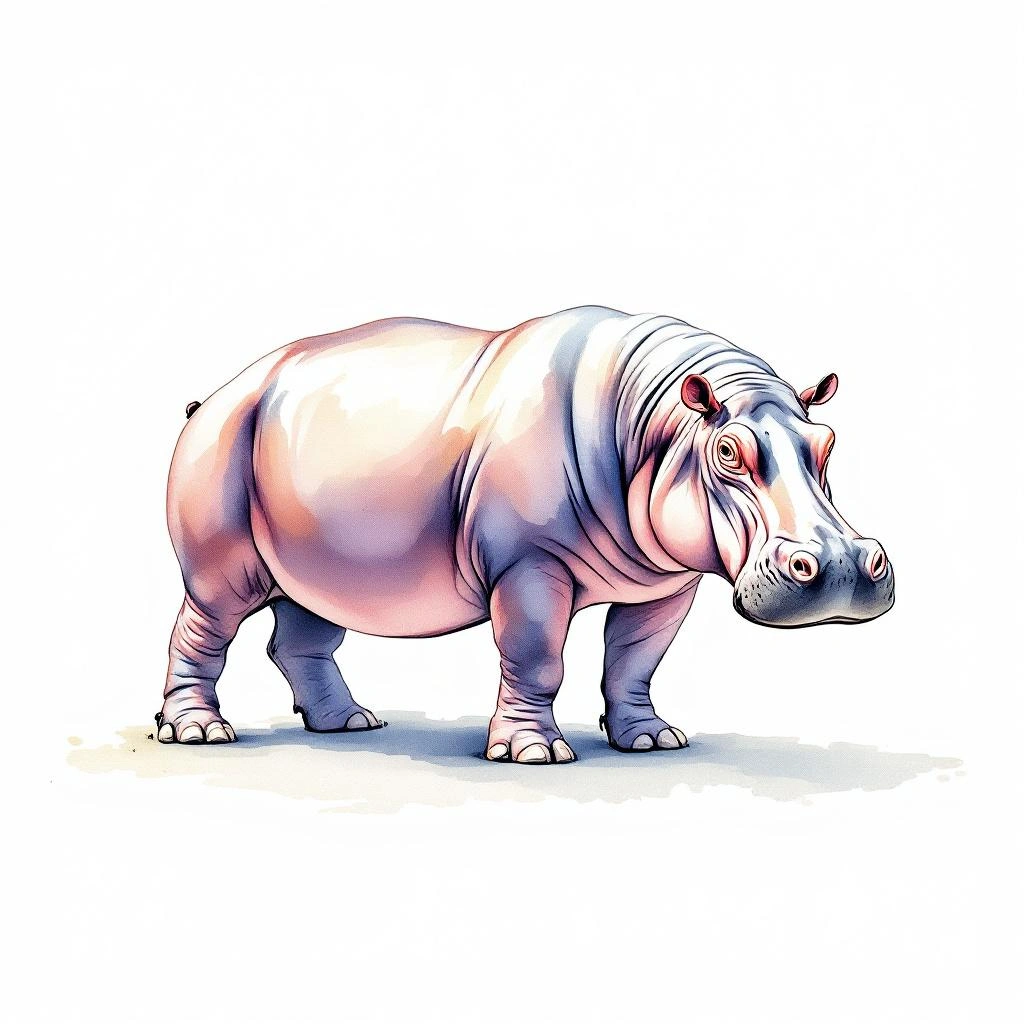
Watercolor illustration of Flußpferd (Hippopotamus amphibius)

Flußpferd

Hippopotamus amphibius

Vulnerable
Diet
Herbivore
Lifespan
40 years
Length
3.5 m
Weight
1.5 t
Population
130.0K
Trend
↓ Decreasing
On this page

About

Africa's most dangerous large mammal, common hippos can reach 3,200 kg and inhabit rivers, lakes, and wetlands of sub-Saharan Africa. Semi-aquatic, spending up to 16 hours daily submerged to keep cool, they graze on land at night. Despite appearing docile, hippos are extremely aggressive and territorial, responsible for hundreds of human fatalities annually. Vulnerable, with populations threatened by habitat loss and illegal hunting for ivory tusks.

Fun Facts

  • Hippos secrete a red substance that acts as sunscreen.
  • They are responsible for more human deaths in Africa than any other large animal.
  • Hippos can hold their breath for up to 5 minutes.

Habitat & Distribution

Found across multiple habitat types including tropical and subtropical moist broadleaf forests, tropical and subtropical grasslands and savannas, and flooded grasslands and savannas, among 5 distinct biome types within the Afrotropic biogeographic realm. Populations are also found in montane and highland environments at higher elevations.

Distributed across Colombia and Kenya. Currently classified as Vulnerable on the IUCN Red List, this species faces significant conservation challenges across its range.

Diet & Behavior

🌿
Herbivore
Flußpferd is classified as herbivore, adapted to its ecological niche.

Diet

🌿 Herbivore
Plant matter 100%

Conservation Status

VU Vulnerable
Estimated Population
130.0K
Population Trend
Decreasing

Names in Other Languages

Spanish Hipopótamo Anfibio
French Hippopotame
German Flußpferd

Explore More

Frequently Asked Questions

What is the scientific name of Flußpferd?
The scientific name of Flußpferd is Hippopotamus amphibius. It belongs to the genus Hippopotamus.
What is the conservation status of Flußpferd?
Flußpferd (Hippopotamus amphibius) is classified as Vulnerable by the IUCN Red List. The population trend is decreasing.
Where does Flußpferd live?
Flußpferd is found in Distributed across Colombia and Kenya. Currently classified as Vulnerable on the IUCN Red List, this species faces significant conservation challenges across its range.. Countries include Colombia, Kenya.
What family does Flußpferd belong to?
Flußpferd (Hippopotamus amphibius) belongs to the genus Hippopotamus, which is part of the taxonomic family Hippopotamidae.
What does Flußpferd eat?
Flußpferd is herbivore. Its diet is adapted to its natural habitat and ecological niche.
How long does Flußpferd live?
Flußpferd has an average lifespan of approximately 40 years in the wild.
How many Flußpferd are left in the wild?
The estimated wild population of Flußpferd (Hippopotamus amphibius) is approximately 130,000 individuals.
Is Flußpferd endangered?
Yes, Flußpferd (Hippopotamus amphibius) is classified as Vulnerable on the IUCN Red List, which means it faces a significant risk of extinction in the wild.

Native Range — 2 Countries

Genus Hippopotamus — 1 Species

🦛
Flußpferd
Hippopotamus amphibius
VU

Nature FYI Family

Explore more of the natural world across our sister sites.

Part of the Nature FYI family — FYIPedia
