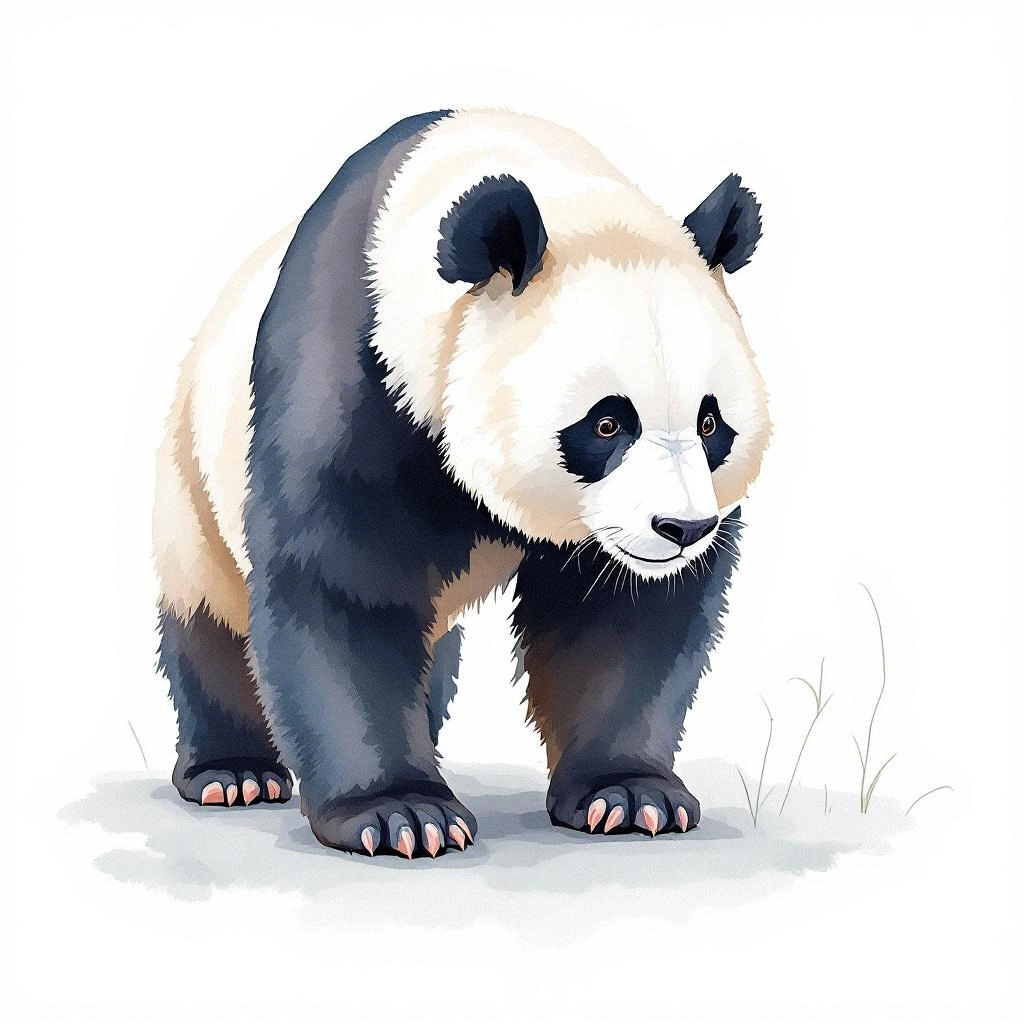
Watercolor illustration of Panda Gigante (Ailuropoda melanoleuca)

Panda Gigante

Ailuropoda melanoleuca

Vulnerable
Diet
Herbivore
Lifespan
20 years
Length
1.5 m
Weight
100.0 kg
Population
1.9K
Trend
↑ Increasing
On this page

About

El panda gigante (Ailuropoda melanoleuca) es un animal emblemático de China, célebre por su pelaje blanco y negro y su dieta basada casi exclusivamente en bambú. Su estado de conservación es vulnerable (VU), es el animal bandera de la conservación internacional de la vida silvestre, y su población ha experimentado cierta recuperación en los últimos años.

Fun Facts

  • Pandas eat for about 12 hours a day.
  • Newborn pandas are about the size of a stick of butter.
  • They have a pseudo-thumb that helps them grip bamboo.

Habitat & Distribution

Found across multiple habitat types including tropical and subtropical moist broadleaf forests, temperate coniferous forests, and temperate broadleaf and mixed forests, among 7 distinct biome types spanning the Indomalayan and Palearctic realms. Populations are also found in montane and highland environments at higher elevations.

Found in China. Currently classified as Vulnerable on the IUCN Red List, this species faces significant conservation challenges across its range.

Diet & Behavior

🌿
Herbivore
Panda Gigante is classified as herbivore, adapted to its ecological niche.

Diet

🌿 Herbivore
Plant matter 100%

Conservation Status

VU Vulnerable
Estimated Population
1.9K
Population Trend
Increasing

Names in Other Languages

Chinese Da xióngmāo
Spanish Panda Gigante
French Panda géant
German Bambusbär

Explore More

Frequently Asked Questions

What is the scientific name of Panda Gigante?
The scientific name of Panda Gigante is Ailuropoda melanoleuca. It belongs to the genus Ailuropoda.
What is the conservation status of Panda Gigante?
Panda Gigante (Ailuropoda melanoleuca) is classified as Vulnerable by the IUCN Red List. The population trend is increasing.
Where does Panda Gigante live?
Panda Gigante is found in Found in China. Currently classified as Vulnerable on the IUCN Red List, this species faces significant conservation challenges across its range.. Countries include China.
What family does Panda Gigante belong to?
Panda Gigante (Ailuropoda melanoleuca) belongs to the genus Ailuropoda, which is part of the taxonomic family Ursidae.
What does Panda Gigante eat?
Panda Gigante is herbivore. Its diet is adapted to its natural habitat and ecological niche.
How long does Panda Gigante live?
Panda Gigante has an average lifespan of approximately 20 years in the wild.
How many Panda Gigante are left in the wild?
The estimated wild population of Panda Gigante (Ailuropoda melanoleuca) is approximately 1,864 individuals.
Is Panda Gigante endangered?
Yes, Panda Gigante (Ailuropoda melanoleuca) is classified as Vulnerable on the IUCN Red List, which means it faces a significant risk of extinction in the wild.

Native Range — 1 Countries

Genus Ailuropoda — 1 Species

🐼
Panda Gigante
Ailuropoda melanoleuca
VU

Nature FYI Family

Explore more of the natural world across our sister sites.

Part of the Nature FYI family — FYIPedia
